Hui Zhang
Satellite images and other accounts suggest that China has started operation of its first 200 MT/year demonstration reprocessing plant, Project I, at the China National Nuclear Corporation (CNNC) Gansu Nuclear Technology Industrial Park in Jinta, Gansu province. Meanwhile, the construction of the second 200 MT/year plant, Project II, at the same site has been completed and would be ready to operate soon, while the third one, Project III, is still under active construction (see Figure 1).
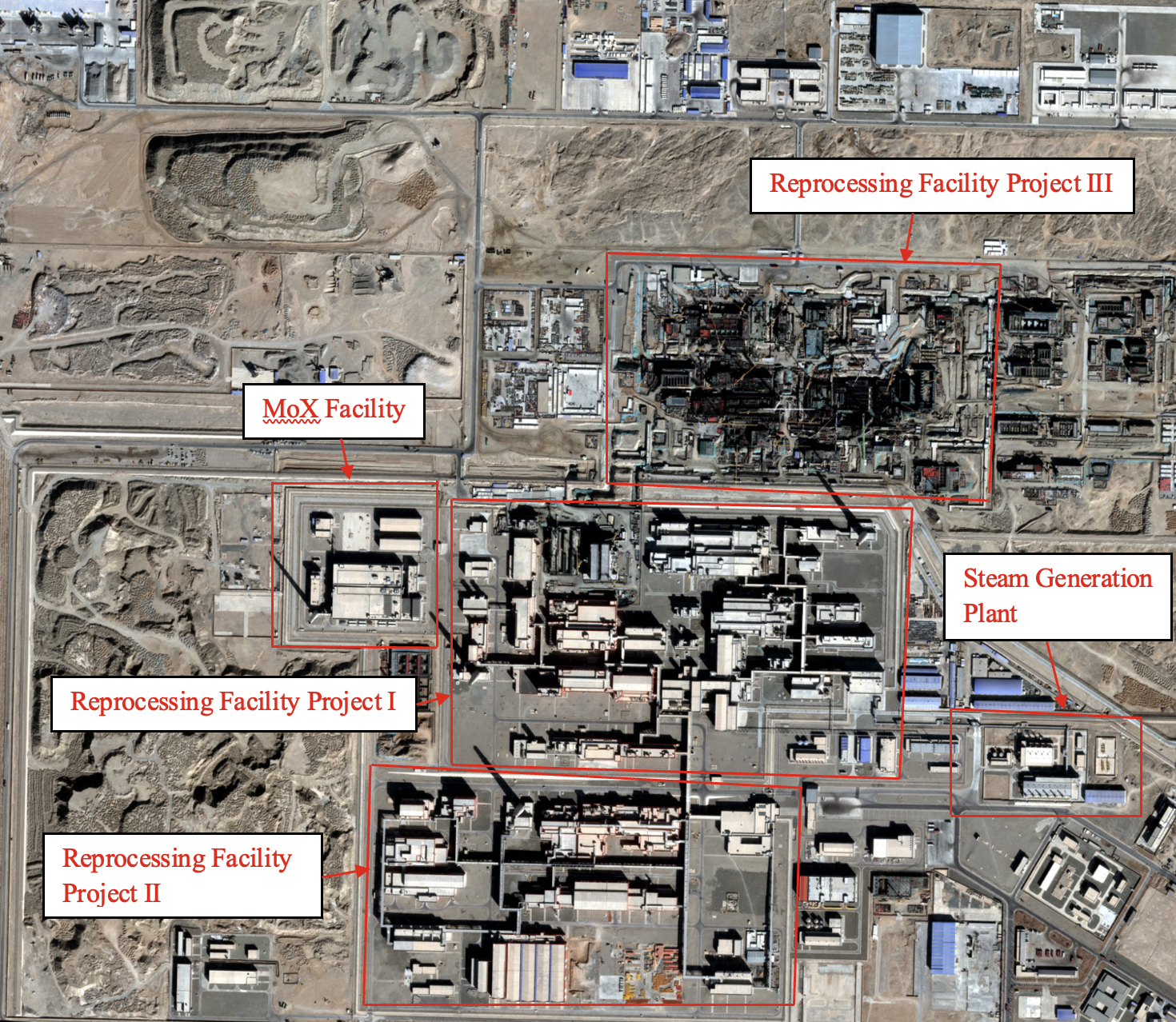 Figure 1: The demonstration reprocessing and MOX facilities at Jinta, Gansu. Satellite image from 2 February 2026 (Coordinates: 40.333750, 98.494167). Credit: SkyFi/Vantor.
China started the construction of its first 200 tons/year demonstration reprocessing plant (Project I) for spent light-water reactor fuel in 2015. Since about 2020, CNNC has begun procuring and installing equipment for the reprocessing lines. At the time, it was expected that Project I would be operational in 2025.
While there have been no official statements or news coverage so far concerning the status of the plant, satellite images and other accounts suggest the first reprocessing plant started operations by mid-2025, maybe as early as late 2024.
The PUREX reprocessing processes need steam for heating chemical mixtures, driving distillation, and dissolving fuel. The demo reprocessing plant seems using the gas-fired steam generation plant with six high stacks for dispersing combustion exhaust, including, for example, water vapor and CO2 (see Figure 2).
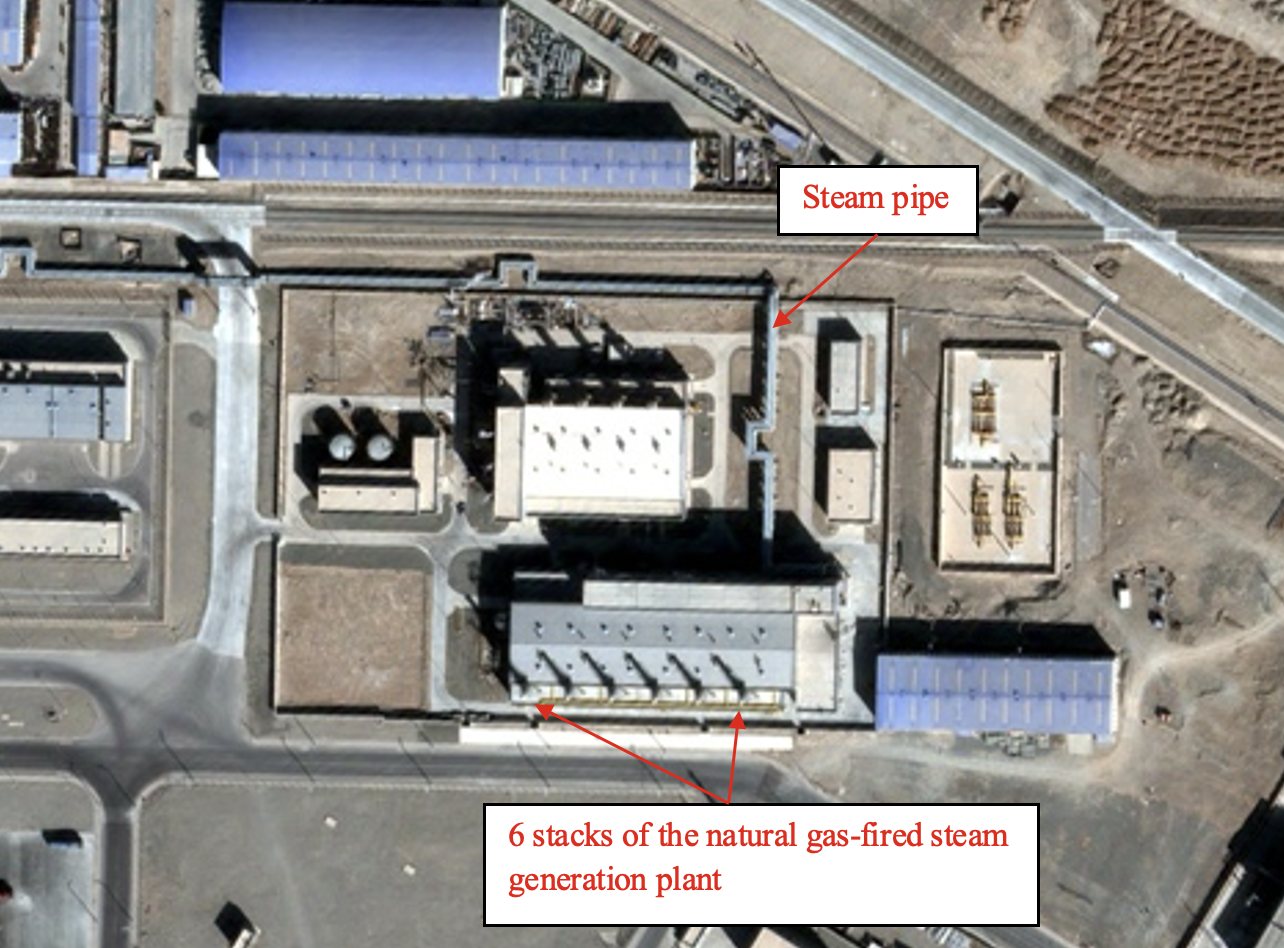 Figure 2. Zoom of the Steam Generation Plant shown in Figure 1. The six stacks of the natural gas-fired steam generation plant and their shadows and the steam pipe are clearly shown in the image.
The image taken on 11 November 2024 shows some plumes over the top of high stacks (see Figure 3). This is consistent with Chinese accounts that the first demo plant had started operation before mid-2025. It should be noted that unlike vapor coming out of reactor cooling towers, these plumes are not necessarily visible to satellite sensors, in particular during warmer weather. Given that the coldest month in Jinta area is January, the plumes would be easier to see in satellite images taken in winter. The image taken on 26 January 2026 clearly shows plumes over the stacks and some steam coming out of the plant (see Figure 4).
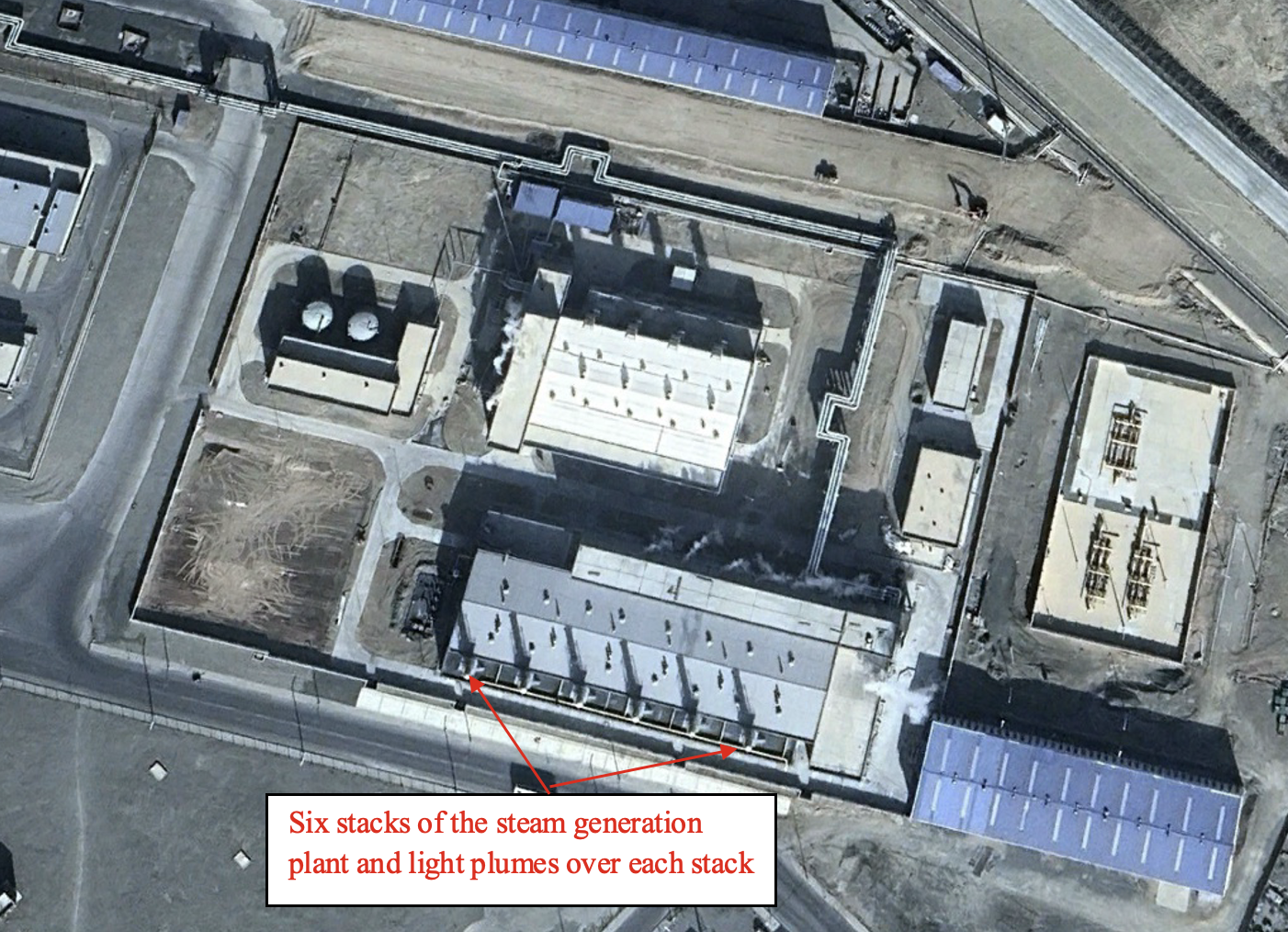 Figure 3. The natural gas-fired steam generation plant near reprocessing and MOX facilities at Jinta, Gansu. Light steam plumes over each stack are visible. Satellite image from 11 November 2024. Credit: Google Earth, Airbus.
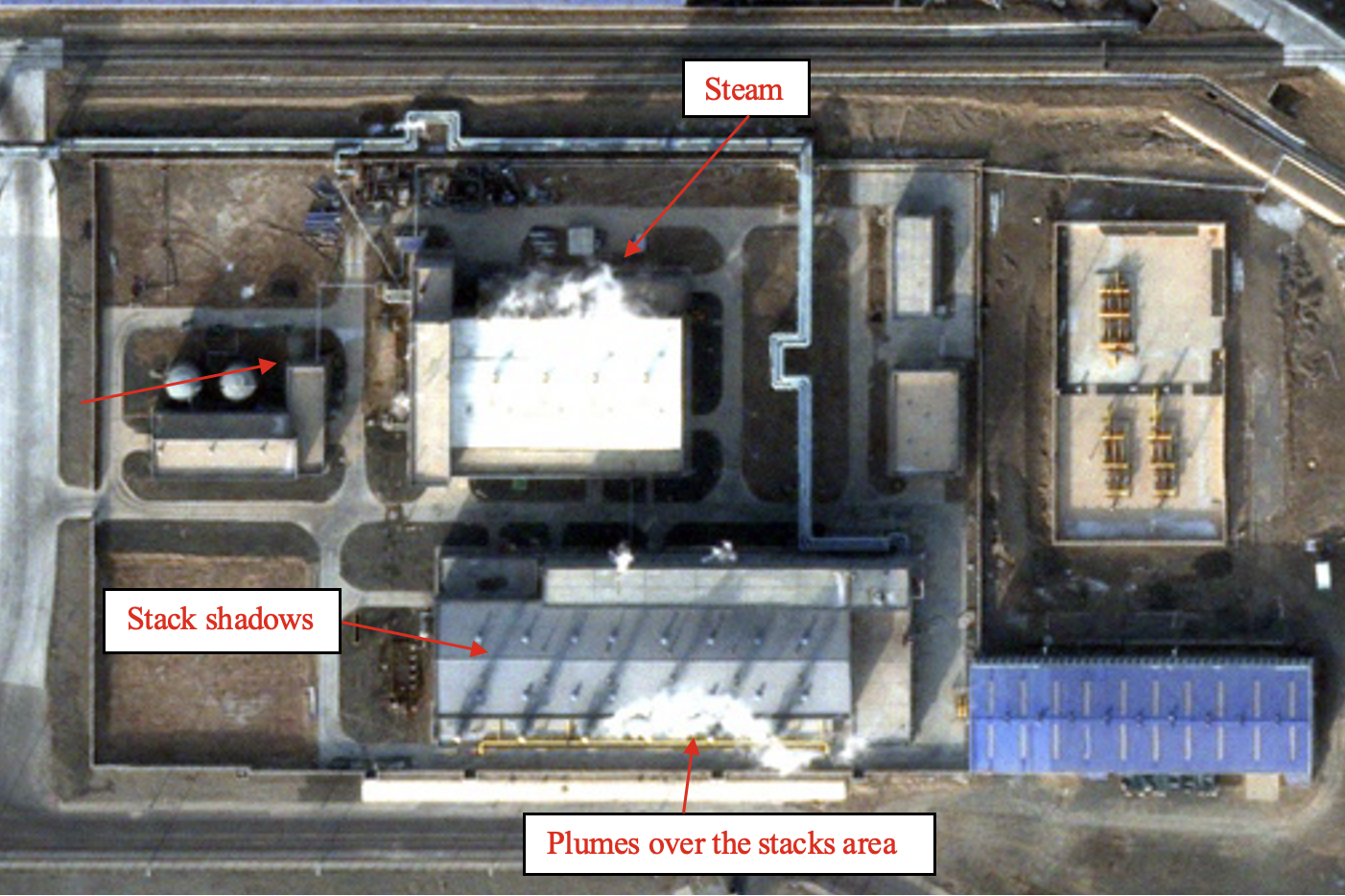 Figure 4. The natural gas-fired steam generation plant near reprocessing and MOX facilities at Jinta, Gansu. Long shadows of six stacks and the plumes above the stacks are visible. Steam can also be seen over the plant. Satellite image from 26 January 2026. Credit: SkyFi/Vantor.
Satellite images and commercial bidding and purchase documents show that China started the construction of its second 200 NMT/year demonstration reprocessing plant (Project II) in late 2019. While Project II construction began about four years later than Project I, satellite images from November 2024 show that it was completed at the same time as Project I, suggesting an accelerated construction schedule. This means that Project II could be ready to operate or may be operating already. If that is the case, it would be much earlier than the previously expected date of 2030.
Also, satellite images and other accounts suggest that in 2023 China started construction of a third demonstration reprocessing plant (Project III). Like Projects I and II, Project III probably has the capacity of 200 MT/year of spent light-water reactor fuel. However, one cannot exclude the possibility that Project III could reprocess spent fuel of fast breeder reactors. Based on the experience of Projects I and II, Project III could be commissioned earlier than the previously expected date of 2033.
Moreover, since 2018, CNNC has built a demonstration mixed uranium-plutonium oxide (MOX) fuel fabrication line with a capacity of 20 MT/year at the site. Satellite images show that the construction of this facility was completed by November 2024. The image taken in 2026 shows the completed MOX plant (see Figure 5). It was expected to be commissioned in 2025. However, it is not clear whether the plant has begun operations.
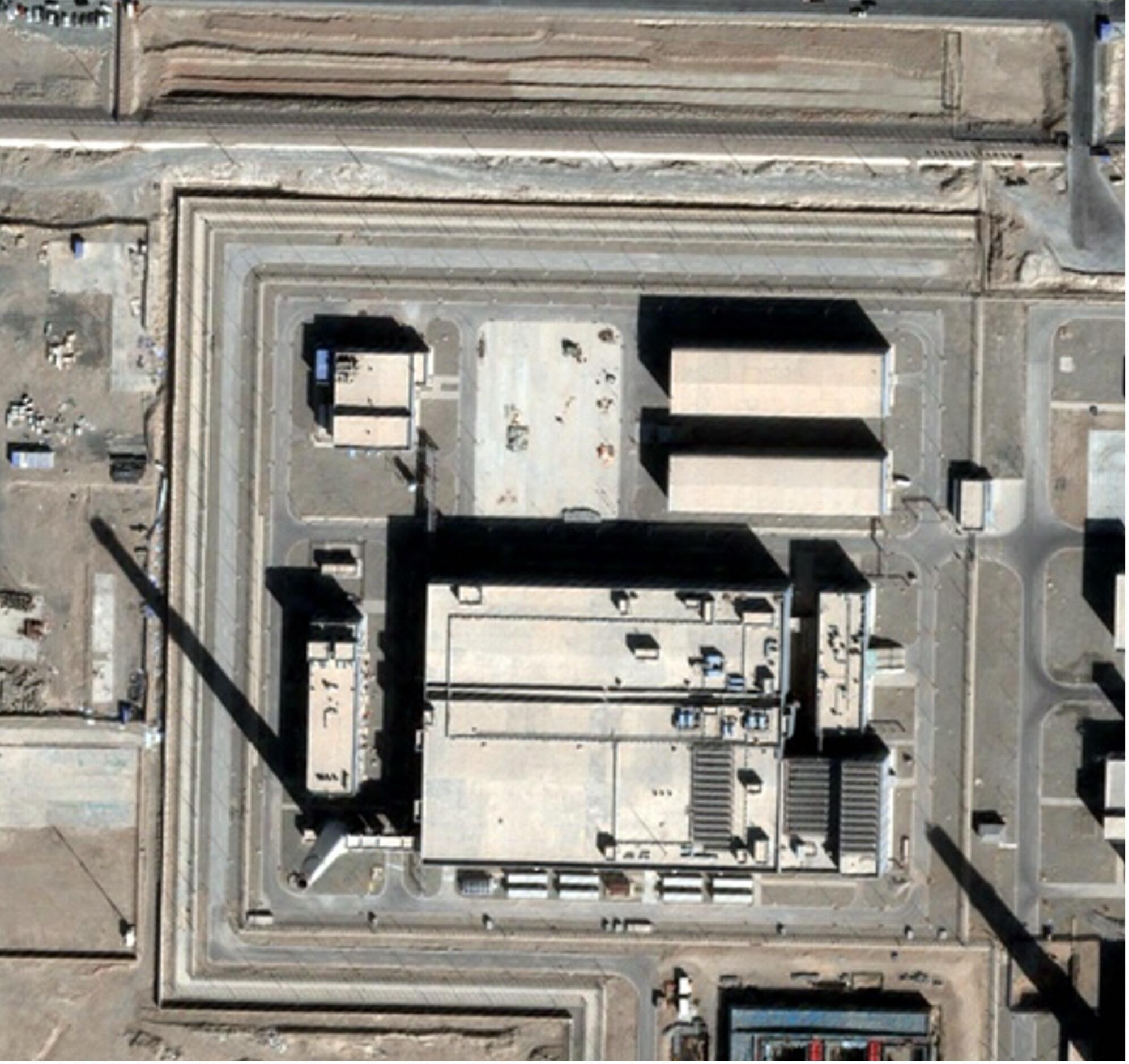 Figure 5. Zoom of the MOX facility shown in Figure 1 (image taken on 2 February 2026). The construction was completed by November 2024. It was expected to be operational in 2025. It is not clear if the facility has begun operations.
This MOX facility is believed to have been built to supply the fuel for China's second CFR-600 breeder reactor, which has been under construction since 2020 and is expected to become operational in 2026. While the fuel for the first CFR-600 reactor, which began operation in 2023, will be supplied by Russia, the second one is likely to use fuel produced domestically. The intergovernmental agreement that covers the cooperation between China and Russia on CFR-600 and related projects appears to include an option of using Russian-origin plutonium, but China may want to use domestic plutonium as well.
If the second CFR-600 uses domestic MOX, and assuming it requires about 5.5 MT of MOX fuel annually (containing about 1 MT of plutonium), the full operation of the first 200 MT/year reprocessing plant (separating about 2 MT of plutonium per year) would cover the CFR's needs twice. With the second reprocessing plant coming online soon, China will quickly accumulate a huge stock of reactor-grade plutonium, at least several times as large as its military stocks of plutonium (about 3 MT).
Moreover, since 2010, China has been producing civilian plutonium at its 50 MT/year pilot plant at Jiuquan complex (Plant 404) at Gansu. In 2017, China submitted its last official report to IAEA and declared having 40.9 kg of separated plutonium as of 31 December 2016. According to one conference report, the pilot plant began operating at the nominal capacity in 2017, which means it has been producing 500 kilograms of plutonium per year since 2017. This means that China may have accumulated about 4-5 MT of reactor-grade plutonium by 2026.
All this shows significant uncertainty about China's plutonium recycling programs. It would be in China's interest to make it more transparent, for example by resuming reporting on its stockpile of civilian plutonium to the IAEA, which was discontinued in 2017.